> For the complete documentation index, see [llms.txt](https://docs.forestall.io/fsprotect/llms.txt). Markdown versions of documentation pages are available by appending `.md` to page URLs; this page is available as [Markdown](https://docs.forestall.io/fsprotect/scans/new-scan.md).
# New Scan
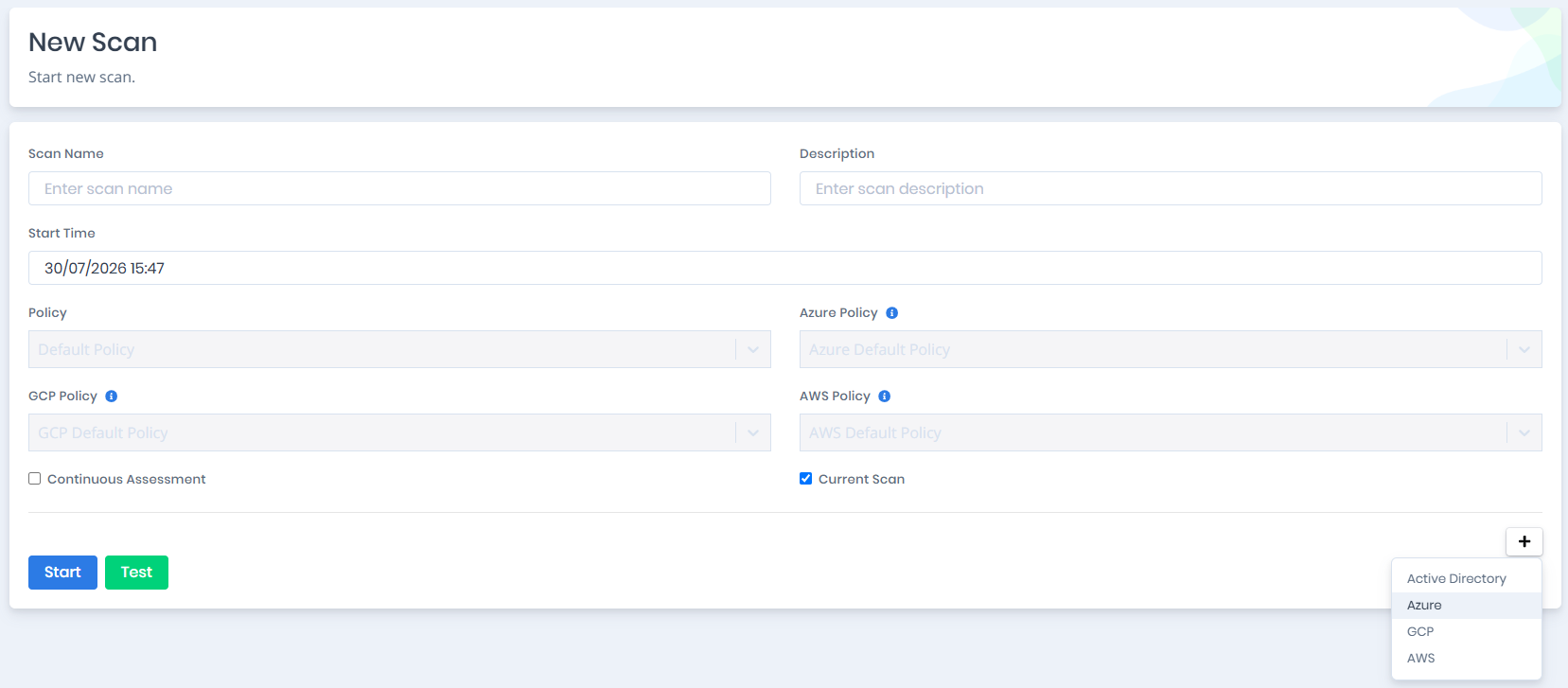
This page contains the required information to start an Active Directory security scan from scratch.
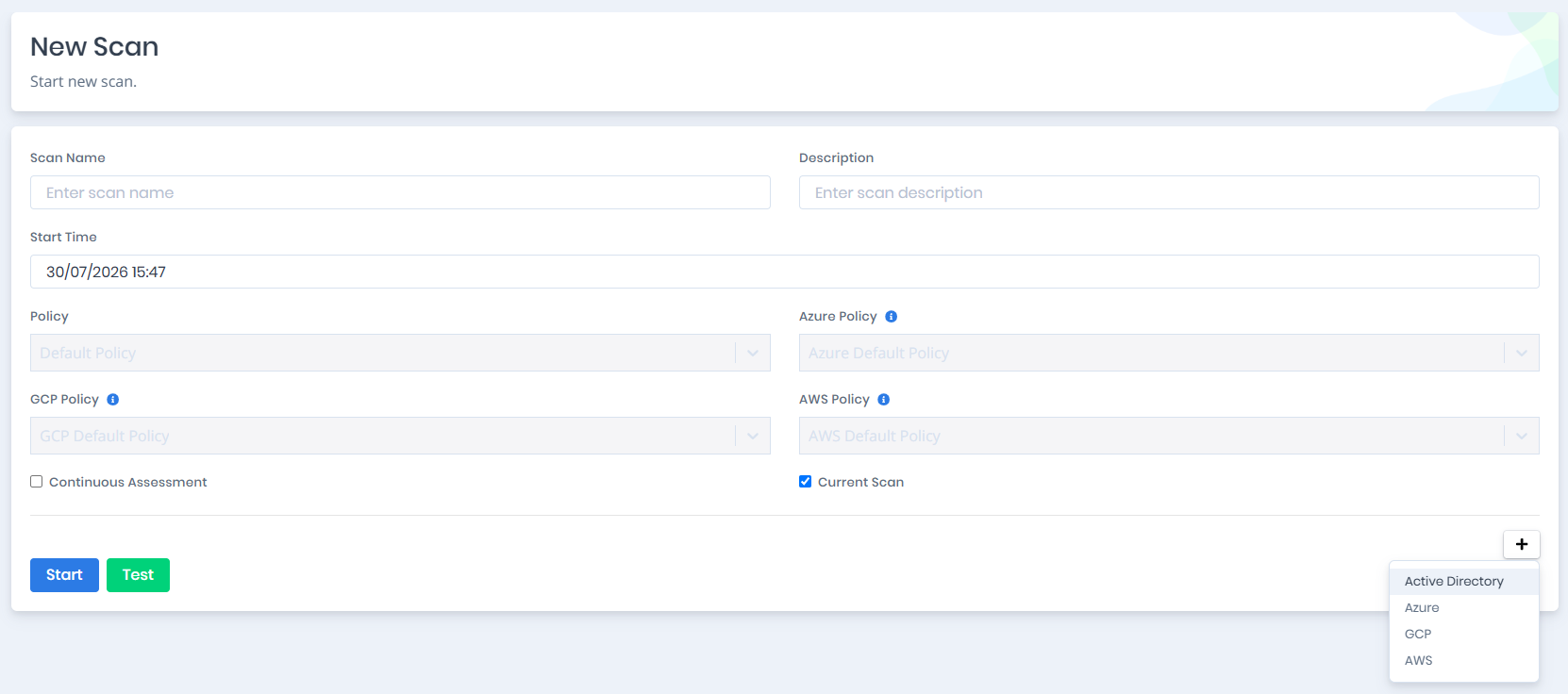
New Scan
## Mandatory Fields
**Scan Name**: Name of the scan.
**Description**: Description of the scan.
**Start Time**: Starting date and time of the new scan. With the help of this option, you can schedule the scan for any date and time as you wish.
**Policy**: Scan policy that contains the settings and the customized specifications which will affect the scan. (See details in [Policy](/fsprotect/scans/policies/policies.md))
**Azure Policy:** Azure policy that contains the settings for azure scans.
## Optional Fields
### **Continous Assesment**
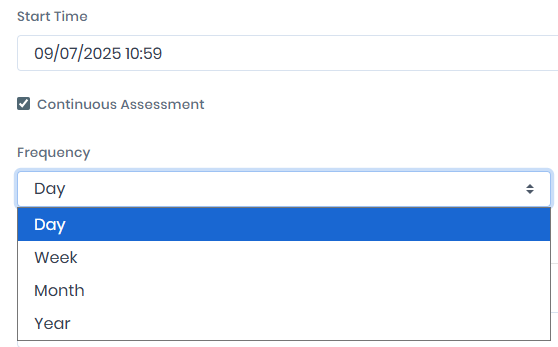
With the help of the continuous assessment option, recurring scans can be automatically scheduled as daily, weekly, monthly, or yearly. Scan will not run until the date selected in Start Time.
Continious Assesment
#### Frequency Day
Frequency - Day: every 3 days
When the Frequency is set to **Day**, a scans run every specified number of days, starting at the specified start time.
#### Frequency Week
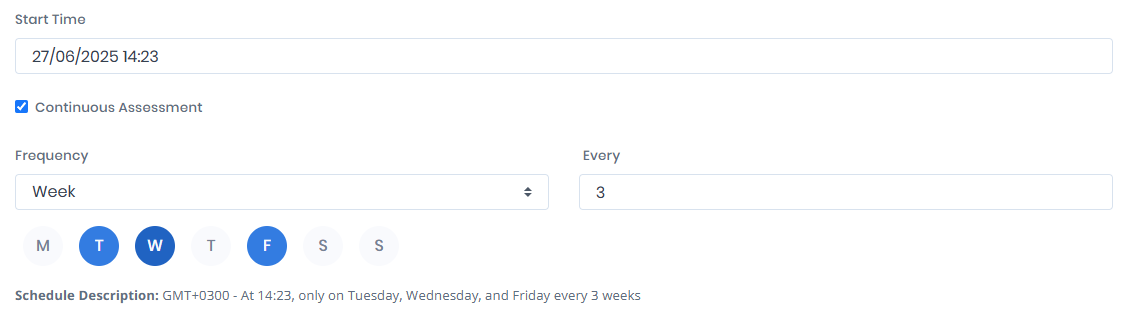
Frequency - Week: every 3 weeks
With the Frequency set to **Week**, the scans run every specified number of weeks on the selected days, starting at the specified start time.
#### Frequency Month
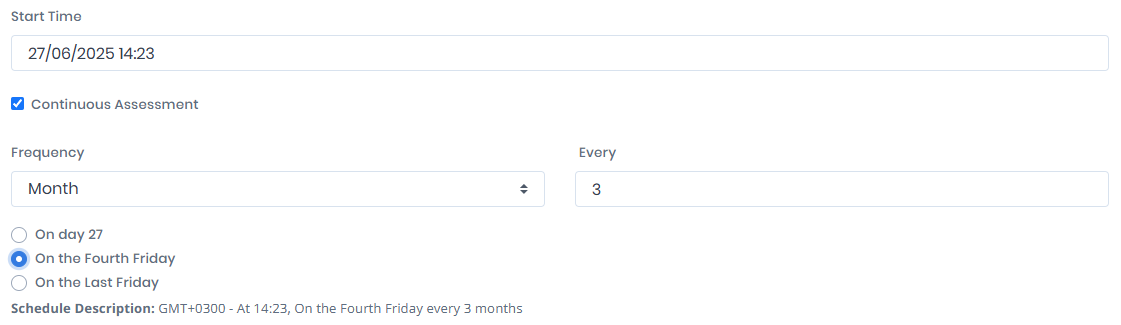
Frequency Month: every 3 months
When the Frequency is set to ***Month***, the scans run every specified number of months on;\
\- The day specified in Start Time,\
\- The day and week calculated from Start Time.
#### Frequency Year
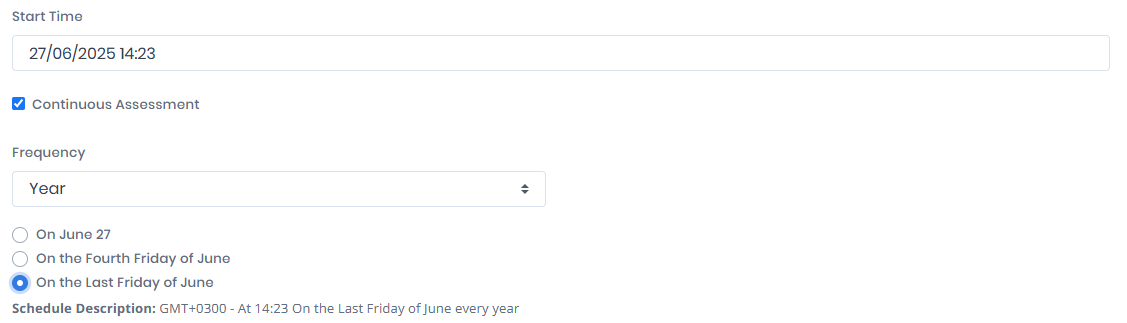
Frequency Year
When Frequency is set to **Y*****ear***, the scans run every year on;\
\- The day specified in Start Time,\
\- The day, week and month calculated from Start Time.
### Active Directory Policy Selection
### Azure Policy Selection
Azure policies become available when the scan is configured for **Azure or Hybrid** environments.\
By clicking the **(+)** button and selecting **Azure**, the scan context enables Azure related settings and allows an **Azure Policy** to be selected.
### **Multiple Environment**
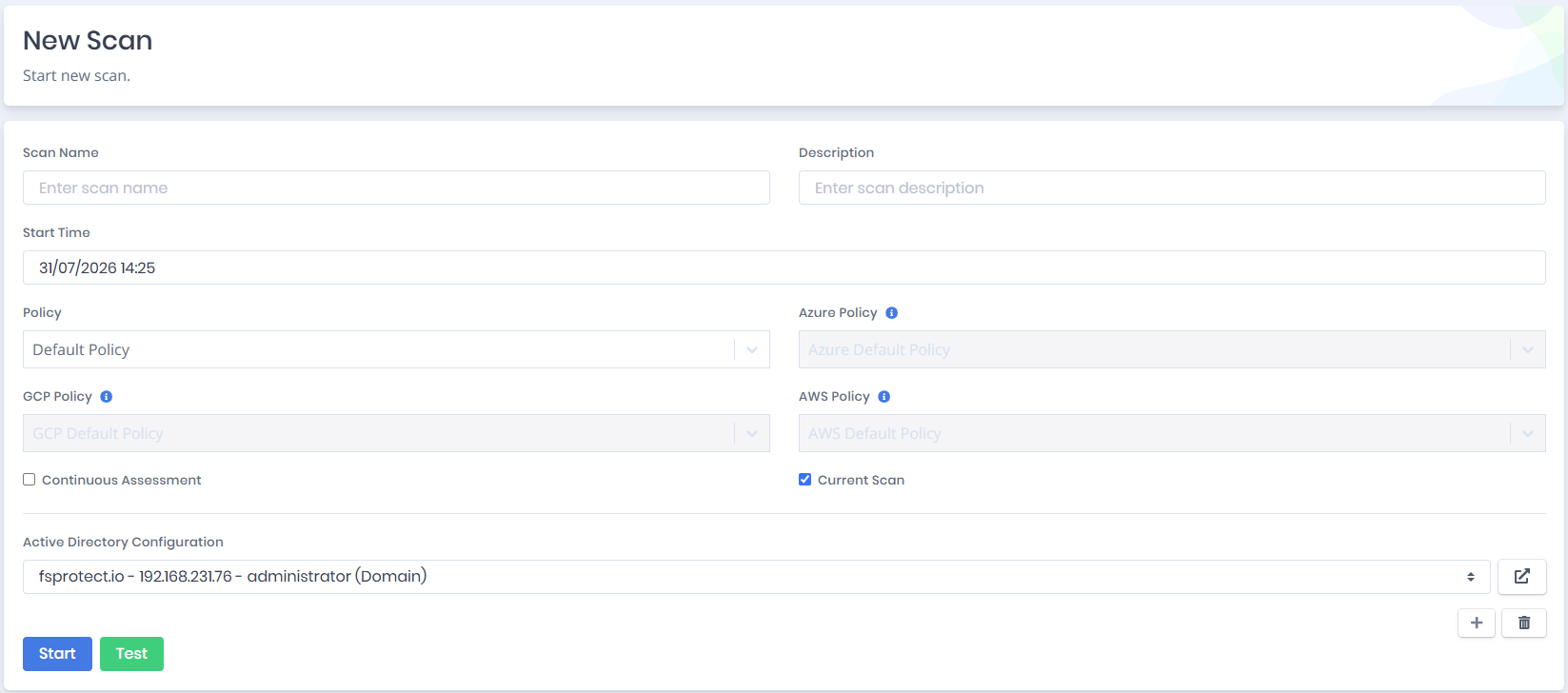
If there are multiple forests, that need to be analyzed in a single scan, information that belongs to the additional environments can be added through the **Add Environment** button.
Added environments can be removed through the **Delete Environment** button.

Click the **+** button to update the existing configuration selected for the related environment. The corresponding configuration page opens in a new browser tab. After completing the update, return to the **New Scan** tab and continue configuring the scan.
%20(1).png?alt=media)